🚩 First Mate's Log: The Question Every Coach Should Ask Before Planning a Retreat

Most coaches start planning a retreat by asking the wrong questions.
Not bad questions. Not unimportant questions. Just ... the wrong ones first.
How many people? How many days? Where should we go? What's the agenda? Should I do breakout sessions or keep everyone together?
These are logistics questions. And logistics matter - but they're downstream of something more important. When you start with logistics, you end up building a retreat around what's convenient rather than what's transformational. You fill days with content because you have days to fill. You pick a venue based on price and availability. You design an agenda that looks full without asking whether it's pointed at anything.
There's a better question to start with. One question that, when you answer it honestly, makes almost every other decision easier.
The Question
What do I want my clients to be able to do after this retreat that they can't do right now?
That's it. Write it down. Sit with it. Give it a real answer - not a vague one like "feel more connected" or "get clarity," but something specific enough that you'd know whether it happened.
I want my clients to be able to have the hard conversations they've been avoiding in their businesses.
I want my clients to be able to trust each other enough to ask for help.
I want my clients to walk away knowing exactly what they're building and why - and feeling certain about it for the first time.
When the answer is specific, something shifts. The retreat stops being an event you're planning and starts being an experience you're designing backward from a real outcome.
How the Answer Changes Everything
Here's what's interesting about this question: it doesn't just shape your programming. It shapes almost every decision that follows.
Length. A retreat built around one transformational shift often works better in three focused days than a sprawling five-day agenda. Or the opposite - some outcomes require enough time that people actually decompress before the real work begins, which means you need more days than you think. The outcome tells you.
Sea days versus port days. This one surprises coaches. If the work you're doing is intensive - the kind that requires long stretches of focused, uninterrupted time - sea days are your best friend. No excursions calling. No decisions about where to go. Just your group, the work, and the water. If the goal is more about connection and shared experience, port days give you the adventures that bond people in ways a facilitated session never quite does. The outcome tells you which balance you need.
Programming structure. When you know what shift you're designing for, you stop filling time and start creating conditions. The sessions become pointed. The unstructured time becomes intentional. Even the meals start doing work - because you know what conversations you're trying to make possible.
The environment itself. This is the part most coaches never get to because they started with logistics. The right retreat environment isn't just "somewhere nice." It's somewhere that makes the outcome you're after more likely. An environment that creates presence, removes distraction, and puts your clients in a headspace where real change is possible.
One More Thing
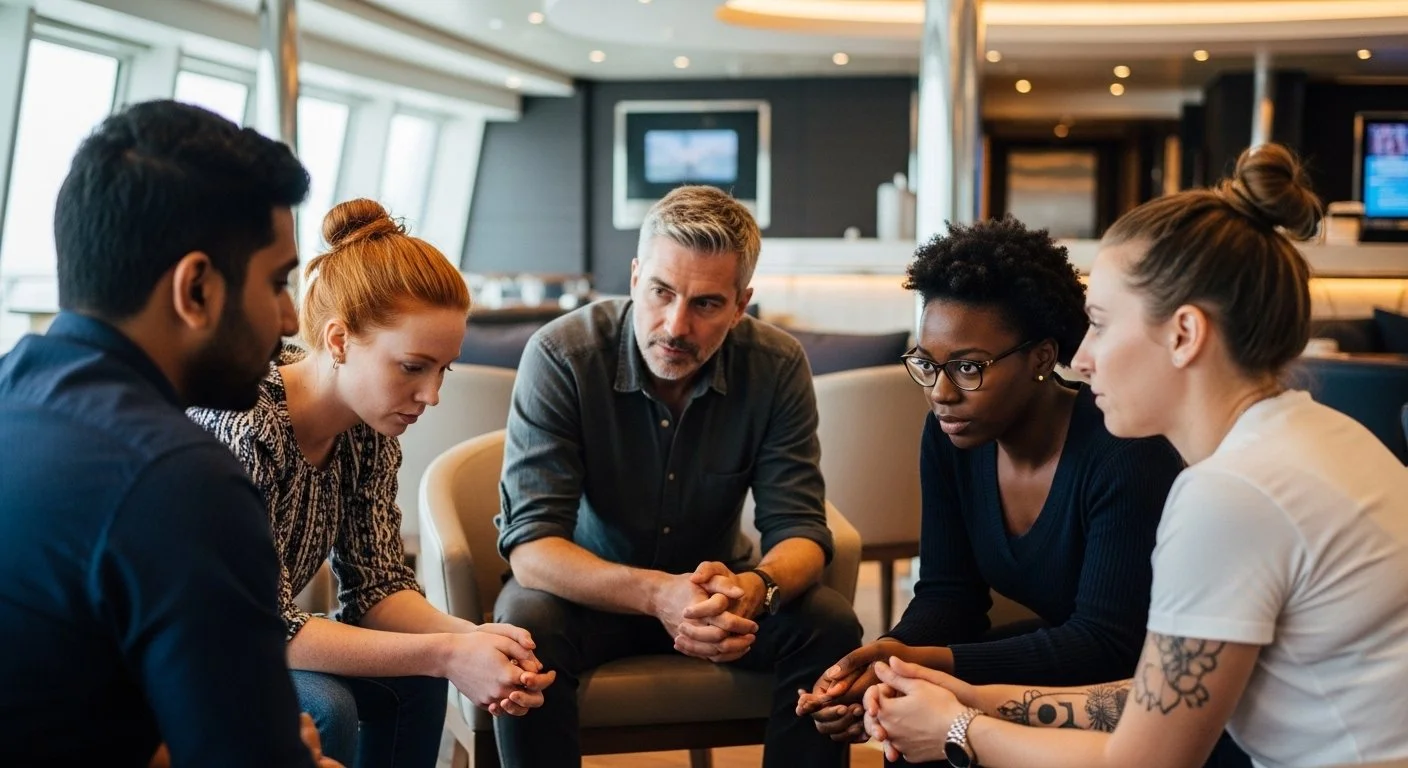
There's something that happens when a group of people boards a ship together and watches the port disappear behind them.
The ordinary world - the emails, the to-do lists, the ten things they were worried about before they left - gets physically smaller. And in that space, something opens up. People say things they haven't said anywhere else. They ask questions they've been carrying for months. They make decisions they've been circling for years.
The ocean has a funny way of making the answer to that one question feel obvious once you're out there.
When you're clear on what you want your clients to be able to do after this retreat - when you have a real answer, not a placeholder - finding the right environment for it becomes a lot easier.
That's where we come in. If you have an answer to that question - even a rough one - start the conversation here and we'll help you build the retreat around it.
And if you're still working on the answer, a couple of posts that might help: this one on what actually makes a venue right for coaching work, and this one on what happens when you get the environment right. And if the retreat keeps not happening despite the clarity, this post is for you.