Round-Trip or One-Way Alaska Cruise? Here's How to Decide.
Most people don't know this decision exists. It might be the most important one you make.
When most people start researching an Alaska cruise, they're thinking about which ship, which ports, which excursion. They're not thinking about whether their sailing starts and ends in the same city - or whether it might start in Vancouver and end in Whittier, or start in Seattle and end in Seward.
But they should be. Because round-trip vs. one-way is one of the most consequential decisions in Alaska cruise planning - and most travelers don't even know it's on the table.
Here's what you need to know.
The Basics
Round-trip sailings depart from one port and return to the same port. Seattle to Seattle. Vancouver to Vancouver. Your flights are simple - in and out of the same city. You know exactly where you're starting and ending. The logistics are familiar and manageable.
One-way sailings start in one port and end in another. Vancouver to Whittier. Whittier to Vancouver. Seattle to Seward. The routing is almost always more interesting - you're not retracing your path through the Inside Passage - and one-way sailings open the door to something that round-trip sailings mostly can't: a land tour extension into the interior of Alaska.
The Case for Round-Trip
Round-trip is the right choice for a lot of travelers, and we want to say that clearly before we say anything else.
If you're sailing Alaska for the first time and you want a straightforward, logistically simple experience - round-trip delivers. You'll experience the Inside Passage. You'll visit Ketchikan, Juneau, and/or Skagway — three ports that give you a genuine understanding of what coastal Alaska looks and feels like. You'll see glaciers and wildlife and scenery that will stay with you for years.
The flight situation is simple: fly in, fly out, same city. No positioning flights. No coordinating two separate airports. No figuring out how to get home from Fairbanks on a red-eye.
One of our clients put it best after her first Alaska sailing: she felt like she'd barely gotten into Alaska before it was time to turn around and head home. That's the honest trade-off of a round-trip sailing - you see a beautiful slice of Alaska, but you don't go deep. For some travelers, that's exactly right. For others, it's the thing that makes them immediately start planning a second trip.
The Case for One-Way
One-way sailings almost always have more interesting itineraries. Because the ship isn't retracing its route, you see more of the Inside Passage rather than the same stretch twice. You access ports and landscapes that round-trip sailings often skip.
But the bigger argument for one-way is what it unlocks: a cruisetour.
A cruisetour combines your Alaska sailing with a land journey into the interior - Anchorage, Denali National Park, Fairbanks, Talkeetna. The Alaska Railroad. A riverboat journey on the Chena River. Wildlife exploration in one of the largest national parks in the world. The vast, wild interior of Alaska that most cruise passengers never see.
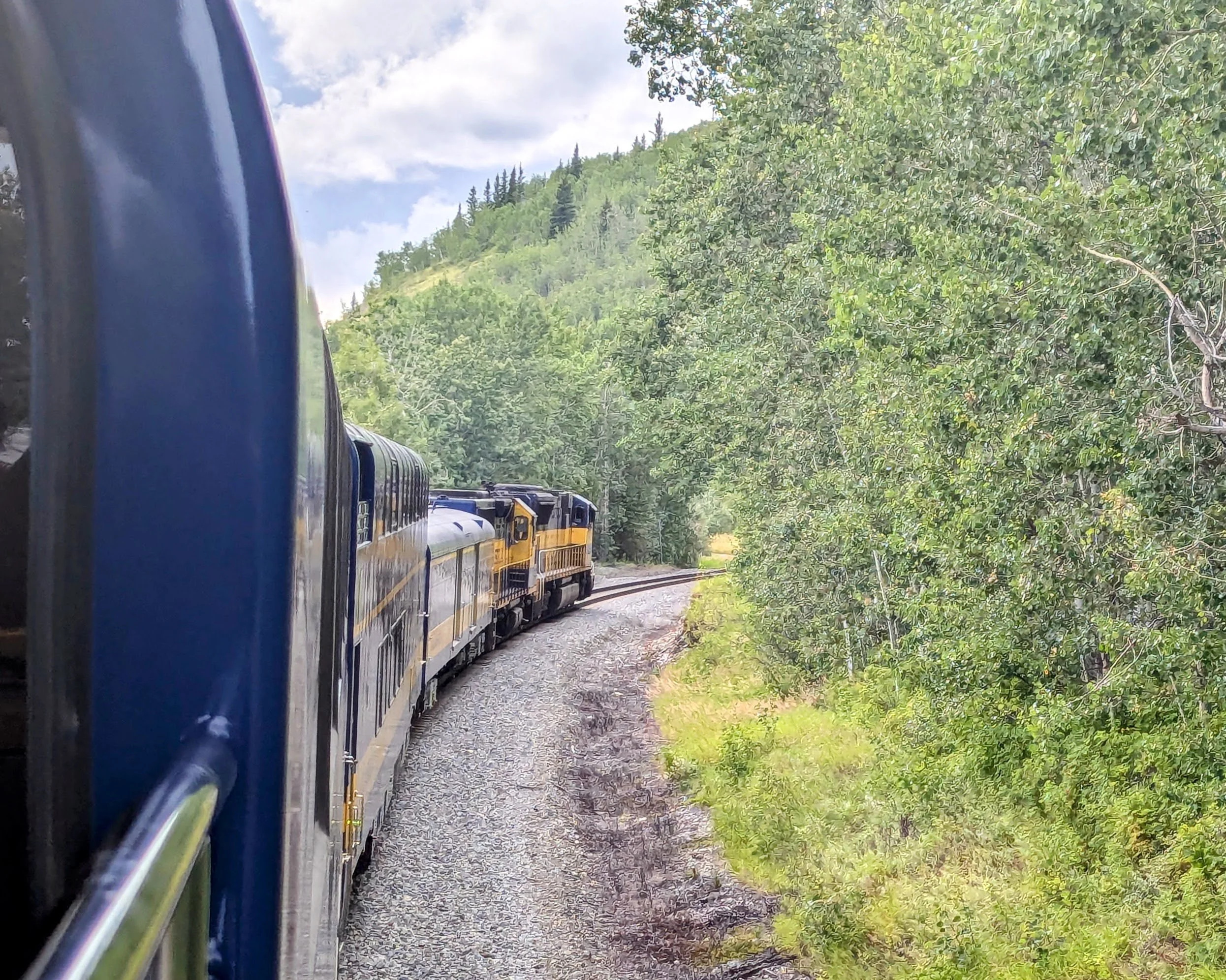
We did a cruisetour ourselves - sailing Vancouver to Whittier, then continuing by rail through Anchorage and Denali to Fairbanks. And we can tell you firsthand: it adds a dimension to the Alaska experience that the cruise alone simply can't replicate.
What We Learned - And What We'd Do Differently
Here's the honest part.
We did our cruisetour after our sailing - ship first, then land. And if we were doing it again, we'd reverse the order. Land first, then ship.
Here's why.
By the time we reached the land portion of our trip, our energy levels were lower than they'd been on the ship. Land travel - even beautifully organized land travel - requires more of you. More carrying of your own luggage. More unpacking and repacking and unpacking again. More coordinating ground transportation, figuring out where to eat, managing the small logistics that the ship had been quietly handling for us for ten days.
Don't get us wrong - the cruisetour was extraordinary. The Alaska Railroad did a remarkable job coordinating luggage delivery directly to Denali Cabins so we didn't have to wait for it. Steve at Denali Cabins was exceptional at helping us get from place to place and steering us toward the best dining. The trains and riverboats and trolleys and buses were wonderful.
But they weren't our stateroom. On the ship, if we needed a rest, we walked down the hall. If we wanted a snack, it was there. If we wanted to change clothes between port and dinner, the whole process took five minutes. The decision fatigue of land travel - even great land travel - is real.
Doing the land portion first means you arrive at the ship having already seen the interior of Alaska. And then the cruise becomes exactly what a cruise should be: a floating home base that handles everything while you absorb what you've just experienced. The most relaxing part of our trip was the sailing - even with port days on almost every day of our cruise. Imagine how good it would have felt if we'd ended with it.
One practical note on packing: if you're doing a cruisetour, we'd recommend packing your land-tour needs in a separate, smaller bag so you never have to dig into your main luggage until you're on the ship and can properly unpack. It's what we did in Vancouver before we boarded - and it made a meaningful difference.
The Flight Reality of One-Way Sailings
One-way sailings come with one genuine complication: you're flying into one city and out of another, and those two cities may be very far apart.
Because not every airline flies to and from every airport, we flew from Reagan National into Vancouver, and then home from Fairbanks into Baltimore. That meant we couldn't park our car at the airport - a small but real logistical wrinkle that required some coordination on the home end.
Fairbanks, specifically, has limited flight options - mostly late-night and overnight departures - which meant we took a red-eye home at the end of an already long trip. It wasn't ideal. We'd factor that in more carefully next time, potentially building in a recovery night before the journey home.
None of this is a dealbreaker. But it's worth knowing before you commit to a one-way itinerary that ends somewhere remote. The Alaska side of the trip will be smooth. The getting-home part requires a little more thought.
The Law You Should Know About
Here's something that surprises most travelers when they first hear it: there's a 140-year-old U.S. law that affects every Alaska cruise itinerary.
The Passenger Vessel Services Act (PVSA) of 1886 states that foreign-flagged ships - which includes most major cruise lines, registered in places like the Bahamas or Panama - cannot carry passengers between two U.S. ports without stopping at a foreign port in between.
In practice, this means 99.99% of Alaska cruises cannot sail from Seattle directly to Juneau and back without making an international stop - which is why Canadian ports like Victoria, Nanaimo, or Prince Rupert appear on so many Alaska itineraries.
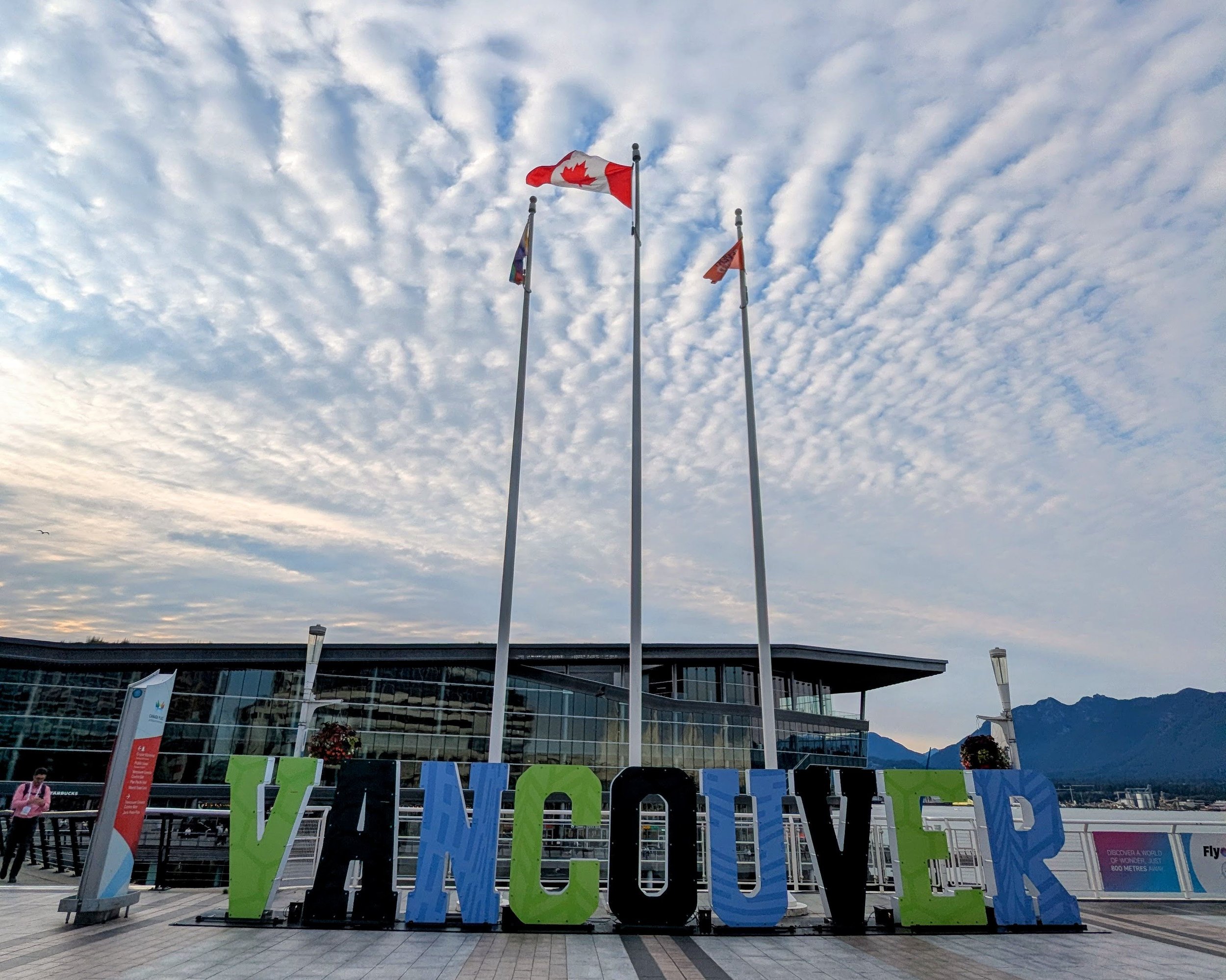
Starting in Vancouver solves this elegantly - you've already started in a foreign country, so the requirement is satisfied before you've even left the dock. That's one of the reasons we consistently recommend Vancouver as an embarkation port when the option exists.
So … Which Is Right for You?
Choose round-trip if: You want simple, familiar flight logistics. You're sailing Alaska for the first time and want a clean, manageable experience. The interior of Alaska isn't calling you yet. You'd rather focus on getting to know the coastline before you go deeper.
Choose one-way if: You want a more interesting itinerary that doesn't retrace its route. You want to see the interior of Alaska on this trip. You're comfortable with slightly more complex flight logistics and want the fuller Alaska experience.
Choose a one-way cruisetour - and do the land portion first: If you want everything Alaska has to offer - coastline, glacier, wildlife, tundra, Denali, the railroad - do the land portion first while your energy is highest, and let the cruise be the glorious, restful finale it's designed to be.
We've done it now. We know what we'd change. And we're happy to help you figure out which version of this trip is right for you.
Questions about round-trip vs. one-way? Book a discovery call and let's talk through the options - or view The Alaska Shortlist → to see our three curated Alaska sailings, all one-way itineraries with pre- and post- cruisetour options available.