What to Look for in a Coaching Retreat Venue (And Why a Ship Beats a Resort)
You've decided you want to do a retreat. Maybe you've known for a while - if you're still on the fence about whether the timing is right, this post is for you. But if you're past that and into the "okay, how do I actually do this" phase, the next decision that trips most coaches up is finding the right venue.
It sounds straightforward. It is not.
The venue isn't just a backdrop. It's a container - and the container shapes everything that happens inside it. The intimacy of the conversations, the level of presence your clients bring, the likelihood that the transformation you're designing actually sticks. Choose the wrong container and you're working against yourself before you've even opened your mouth.
So before we make the case for why a cruise ship is the best container most coaches aren't using yet, let's talk about what you should actually be evaluating - in any venue - when you're planning a coaching retreat.
The 6 Criteria That Actually Matter in a Retreat Venue
1. Containment: Can People Actually Disconnect?
This is the one most coaches underestimate, and it might be the most important.
The best coaching work happens when your clients are fully present - not half-present with one eye on their inbox, their family, and everything waiting for them at home. A venue that makes it genuinely easy to leave undermines your retreat before it begins. Drive-in, drive-out? Half your group will be partially somewhere else the whole time.
What you're looking for is a venue that creates a natural boundary between the retreat and ordinary life. Something that makes showing up fully feel like the obvious, easy choice - because there's nowhere else to be.
2. Dedicated Group Space That Doesn't Feel Like a Conference Room
You need a private space for your sessions. Not a ballroom divvied up by accordion walls, not a "flexible space" that gets reconfigured for a wedding reception the night before. A real, dedicated room your group can own for the duration of the retreat.
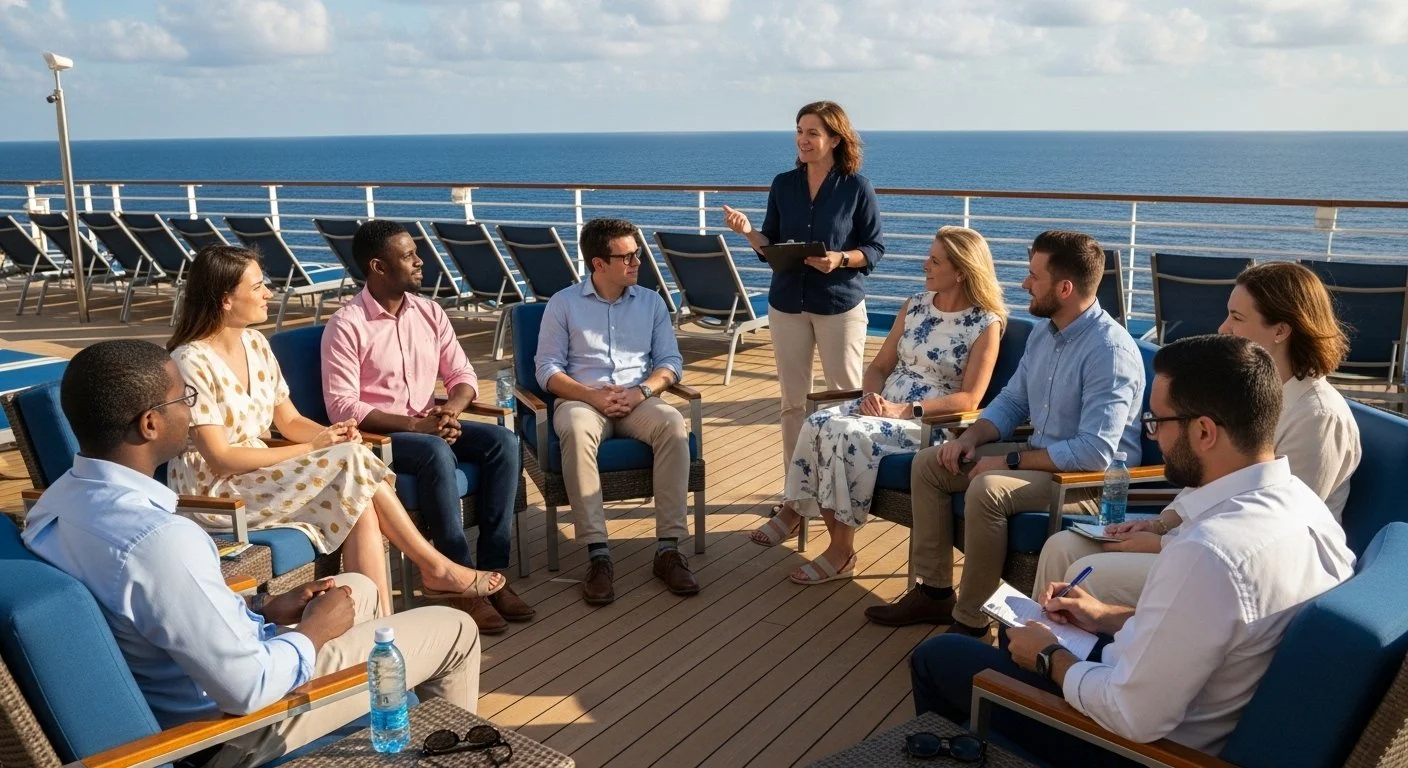
But the physical space matters too - not just whether it exists, but what it feels like. Fluorescent lights and stackable chairs do something to the energy in a room. So does natural light, a view, furniture that invites people to settle in. The room where you do your deepest work should feel like it belongs there - not like someone cleared out the chairs from last night's sales dinner.
3. Meals and Downtime Built In — Without Logistics Falling on You
One of the underrated killers of a coaching retreat is the logistical overhead that lands on the host. Coordinating restaurant reservations. Figuring out who has dietary restrictions. Making sure there's somewhere for the group to land between sessions that isn't just "wander and reconvene."
The best venues handle this invisibly. Meals are available, good, and don't require you to manage them. There are natural spaces for the group to gather informally - the conversations that happen over lunch or after dinner are often the ones your clients remember most. You want those to happen organically, not require a spreadsheet.
4. Options for Both Structured and Unstructured Time
A great retreat isn't wall-to-wall programming. It's programming and space — and the venue needs to support both. Your clients need somewhere to go when they're not in session: something to do that's interesting, restorative, or social, without you having to organize it.
This matters more than most first-time retreat hosts realize. The unstructured moments are where integration happens. Where someone processes the breakthrough they just had in the room, or where two clients build the kind of relationship that turns them into lifelong advocates for each other and for your work. (For ideas on how to design for that kind of connection intentionally, this post is worth bookmarking.) (If you're still on the fence about whether a retreat is worth the effort at all, this post addresses exactly that.)
5. Value That Reflects the Caliber of Your Work
Your retreat venue sends a signal. It tells your clients something about how you think about the investment they're making in working with you - and about the kind of experience they should expect.
A forgettable venue signals a forgettable experience. That's not what you're selling. What you're looking for is a setting that makes arriving feel like an event in itself - somewhere your clients immediately feel like something different is possible here.
6. Pricing That Actually Works for Your Group Size
Many coaches are surprised to discover that the venues that look most impressive on a website are also the most punishing when you get to the fine print. Minimum F&B spends. Room block requirements. Attrition clauses that penalize you if not everyone shows up. Pricing that made sense for 80 people but doesn't work at all for 12.
You need a venue where the economics work for your actual group - not a venue that was designed for corporate conferences and is technically available to you. (And if you're not sure what your timeline should look like, this post on planning milestones is worth a read before you start reaching out to venues.) (And if you're thinking about timing and budget in the same breath, this post on planning milestones is worth a read before you go too far down the research rabbit hole.)
Why a Resort Struggles With Every Single One of These

Now let's be direct about it.
Resorts are beautiful. The photos are always good. And for a lot of events, they're a perfectly reasonable choice. But for a coaching retreat specifically? They fall short in almost every category above - not because they're poorly designed, but because they're designed for something else.
Containment: Resorts are designed for optionality. The spa, the pool, the golf course, the shuttle to town - it's all there to give guests reasons to stay. But it also gives your attendees constant reasons to half-check out. And the resort is typically accessible to anyone with a car, which means your clients are never truly away. The retreat-to-ordinary-life boundary stays porous.
Group space: Most resort meeting rooms were designed for corporate training, not transformation. You'll get the accordion-walled ballroom, the stackable chairs, the round tables that work fine for a sales kickoff and feel completely wrong for a deep coaching container.
Meals and logistics: At a resort, meals are an additional cost - and a coordination burden. Someone has to manage the restaurant reservations, chase down the dietary restrictions, figure out where the group eats on the night the main restaurant is closed. That someone is usually you.
Unstructured time: Resorts do offer downtime options, and this is genuinely one of their stronger suits. But the options are often a la carte - activities your clients have to seek out and pay for separately, rather than things that simply exist as part of the experience.
Value signaling: A nice resort feels like a nice resort. It doesn't feel like an experience that was specifically designed for this group, this purpose, this kind of work.
Pricing: Group minimums, attrition clauses, mandatory F&B spends - resort contracts can be punishing for smaller coaching groups. The pricing structures were built for corporate clients with larger budgets and more attendees.
Why a Cruise Ship Wins on Every Criterion
Here's the honest case.
Containment is built in. When you're at sea, you're at sea. There's no popping out to handle something at the office, no leaving early to meet a local friend for dinner. The boundary between the retreat and ordinary life is literal and physical. Your clients are present because there is nowhere else to be. That's not a limitation - it's one of the most powerful things a retreat environment can offer.
Group space exists and it's yours. Cruise ships have dedicated event and meeting spaces designed for groups - private rooms with real furniture, natural light, and a view of the ocean. These aren't accordion-walled ballrooms. They're spaces that feel like they were built for the kind of focused, intentional work you're doing.
Meals and downtime are completely handled. Multiple dining venues, all included. Your clients eat well without you lifting a finger. And the ship itself provides a constant, curated environment for informal connection - the conversations at the pool, the ones that happen over dinner in the main dining room, the ones at the bar at 10pm. You don't organize any of it. It just happens, because the environment is designed for it.
Structured and unstructured time are both fully supported. Between your sessions, your clients have a ship. Shore excursions at ports. Spa, pool, fitness, entertainment, exploration. And on sea days — the days when you're sailing between destinations - the group is contained and focused in a way that's genuinely hard to replicate anywhere else. Sea days are underrated. For coaching retreats especially, they're often where the deepest work happens.
The value signal is unmistakable. Your clients board a ship. They unpack once. They wake up in a different place every morning. The experience announces itself as different from the moment they step on board - and that difference primes them to show up differently inside your sessions.
The pricing works. For groups of 10–30 people - the sweet spot for most coaching retreats - cruise group pricing is often more competitive per person than a comparable resort package. No attrition penalties. No mandatory F&B minimums. Most of what your clients need is already included in the cabin cost.
One More Thing Worth Saying
You don't have to know anything about cruise ships to pull this off. You don't need to compare itineraries, negotiate group contracts, or figure out which ship's meeting room is actually the right size for your group and your programming.
But here's what sets working with us apart from working with a general travel agent or event coordinator: we actually know these ships.
Not from brochures. From being on them. We sail multiple times a year specifically to evaluate ships as group venues, and when we do, we're looking at specific things that matter for group organizers:
Layout and flow - how spaces connect, where natural gathering points are, and how the design either encourages or hinders group movement. A ship that feels great for leisure can still work against you if your group has to navigate three decks between sessions and dinner.
Staterooms - we visit multiple cabin categories to evaluate comfort, functionality, and feel. Cabin quality directly affects your attendees' overall satisfaction, and "it looked fine in the photos" is not a scouting strategy.
Dining and entertainment - we eat in the venues, we assess variety, we check whether the ship genuinely offers something for everyone in your group or whether it caters narrowly to one type of traveler.
Atmosphere under pressure - we pay attention to how a ship feels when it's fully booked. Some ships maintain their appeal at capacity; others become overwhelming. That's the ship your clients will actually be on, and it's the one we evaluate.
That firsthand knowledge is what lets us tell you not just which ships have meeting space, but which ships fit the retreat you're trying to create - and why.
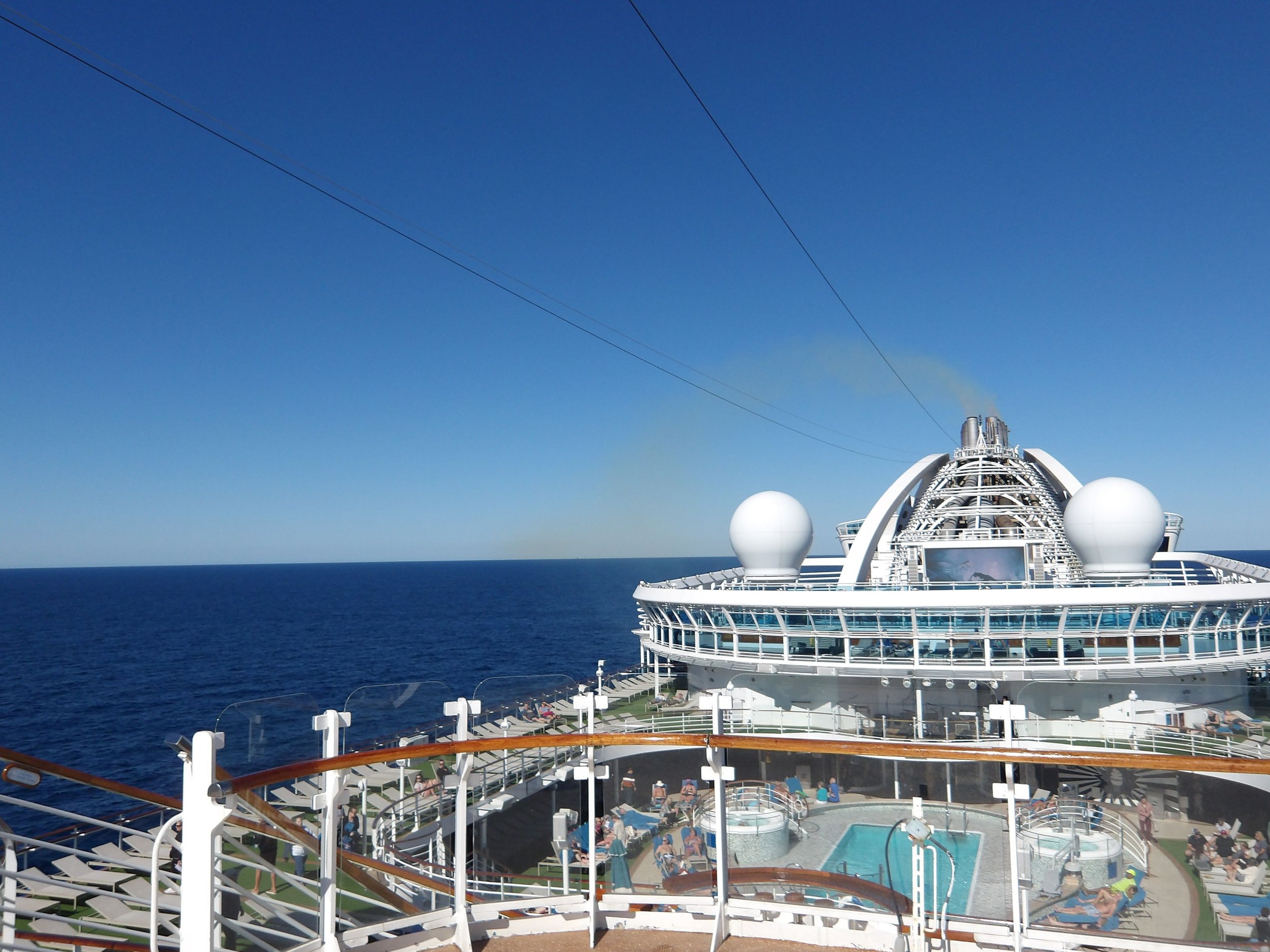
Want to see for yourself before you commit? We offer two ways to do that:
Quick Dips are curated 3 - 4 day sailings on select Celebrity Cruises, Royal Caribbean, and Virgin Voyages ships - designed specifically for coaches, group organizers, and community leaders who want to experience a ship as a venue before booking a full group event. You board, you sail, you return home knowing exactly what you're working with. No guesswork, no second-hand information.
Ship tours are an even lighter first step. We regularly attend ship tours at East Coast ports, and if you'd like to join us for a walkthrough and a real conversation about what makes a particular ship work for groups, just let us know.
And when you're ready to plan the retreat itself, we handle the ship selection process from start to finish - from your discovery call to three curated proposals - so you can focus on designing the retreat, not the logistics of where to hold it.
Want to see what a coaching retreat at sea actually looks like - formats, group sizes, how the planning process works? We've put it all in one place for you. Or if you're ready to talk specifics, book a free discovery call here.