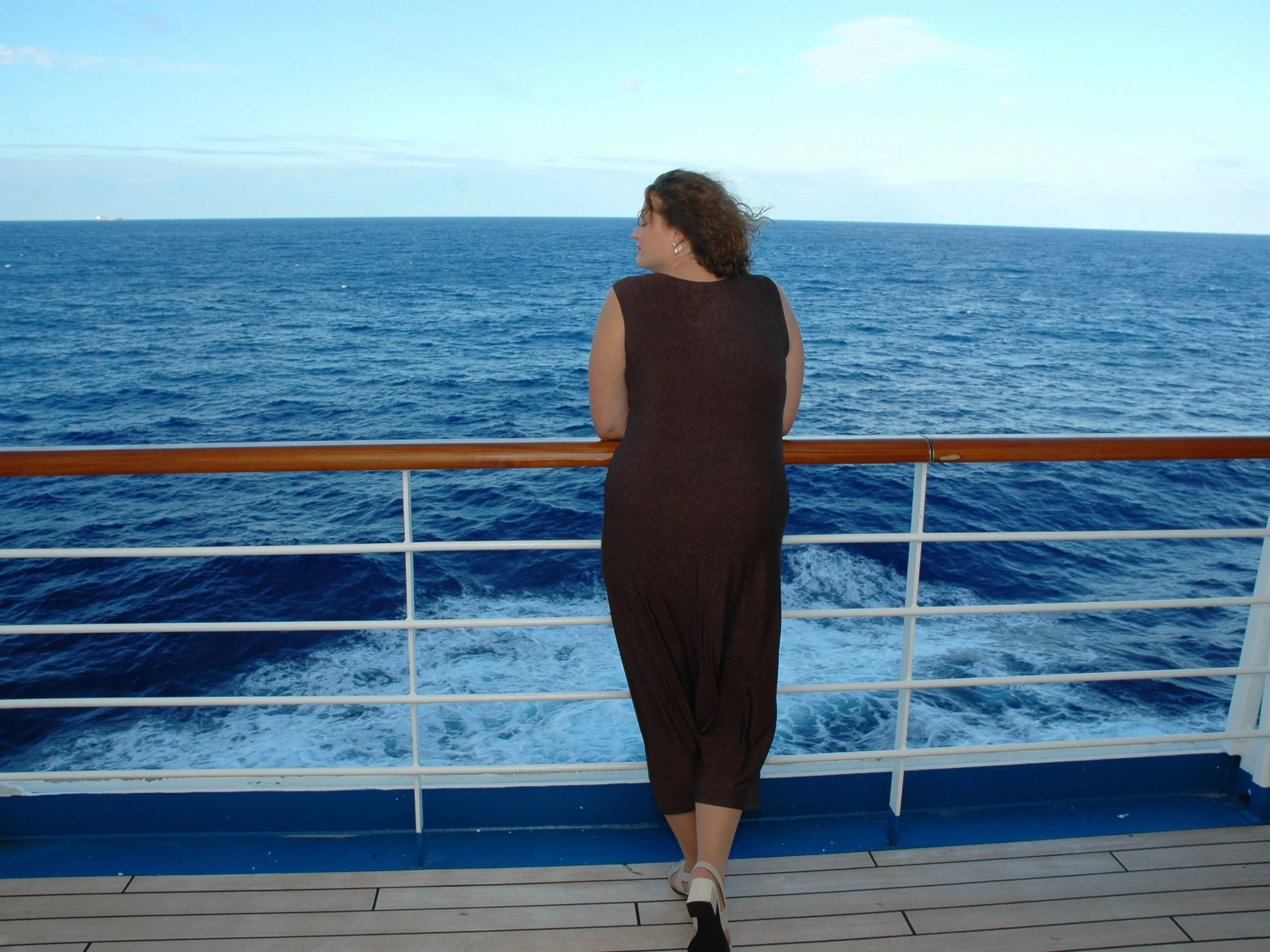
The science of decompression - and why a longer cruise might be exactly what your body and brain have been waiting for.
We watched it happen in real time.
A client - an executive, a startup entrepreneur, someone who builds things and leads people and moves fast - joined us on a sailing a little while back. Smart, driven, the kind of person who is always three conversations ahead of the one she's in.
For the first three days, she couldn't settle. She was checking her phone. Checking her email. Running through mental to-do lists. Thinking about her clients and their projects. Physically present on the ship but mentally still at her desk. You could see it - the tension in her shoulders, the way her eyes went somewhere else mid-conversation.
And then, slowly, something shifted.
By day four, she was different. By the end of the week, she was genuinely, visibly, unmistakably relaxed in a way that had nothing to do with effort or intention. She hadn't decided to relax. She'd just finally run out of runway to keep not relaxing.
What we watched happen to her turns out to have a name. And a timeline.
The four-day threshold
A survey commissioned by Apple Vacations and conducted by OnePoll found that it takes the average American roughly four days to stop thinking about work on vacation. Four days before the mental chatter quiets down. Four days before the inbox stops feeling like a presence in the room.
For a three-day weekend, that math is brutal. You never get there.
For a week-long trip, workers spend just 43 percent of their time without the drudgery of work lingering in the back of their minds. Less than half your vacation is actually a vacation.
Eight in ten workers surveyed found they struggle to get away from the office for vacations at all, leaving part of their yearly vacation time unused. Another 37 percent admitted they feel guilty about leaving unfinished work at the office.
None of this is a character flaw. It's the predictable result of years of conditioning - always available, always responsive, always on. The brain doesn't know it's on vacation just because your body got on a plane. It needs time to catch up.
Which is why the length of your trip isn't a luxury consideration. It's a functional one.
A study published in the Journal of Happiness Studies found that it takes eight days of vacation for the benefits of a break to be fully felt. Eight days. Which means a seven-night trip gets you there - barely - on the last day.
Health educator and researcher Emily Nagoski puts it more directly: as stress compounds, mood regulation becomes less effective, creative ability is stunted, and problem-solving diminishes. The body moves into survival mode. She also notes something that will feel familiar to anyone who has ever arrived somewhere beautiful and immediately come down with a cold: the body had been running past its limits for so long that it collapses the moment it finally gets permission to rest.
"The need for rest will grab you by the shirt, slam you to the ground, and say - I told you to lie down," she writes.
This is not a character flaw. It is a predictable physiological response to an unsustainable pace. And it has a solution.
What happens after day four
Once the decompression threshold is crossed - once the mental noise actually quiets - something interesting happens.
Research shows that disconnecting from devices for four days led to a 50 percent spike in creativity. Brain imaging studies show that doing nothing, being idle, daydreaming, and relaxing create alpha waves in the brain that are key to creative insights and innovative breakthroughs.
In other words: the clarity that high-performing professionals are constantly trying to manufacture through productivity systems and morning routines and strategic planning sessions? It shows up naturally when the brain finally gets to rest.
The executives and entrepreneurs we work with often tell us that their best thinking - the kind that actually moves things forward - doesn't happen at their desks. It happens in the shower. On a long walk. In a quiet moment when nothing is demanding their attention.
A longer sailing is essentially an extended version of that long walk. Days of unstructured time, new scenery, no agenda. The thinking that happens in that space is often the most valuable thinking of the year.
Research by the American Psychological Association found that the majority of working Americans reported positive effects of taking vacation time - returning to work with more positive mood (68 percent), more energy (66 percent), more motivation (57 percent), and less stress (57 percent).
The benefits are real. The question is whether you give yourself enough time to actually access them.
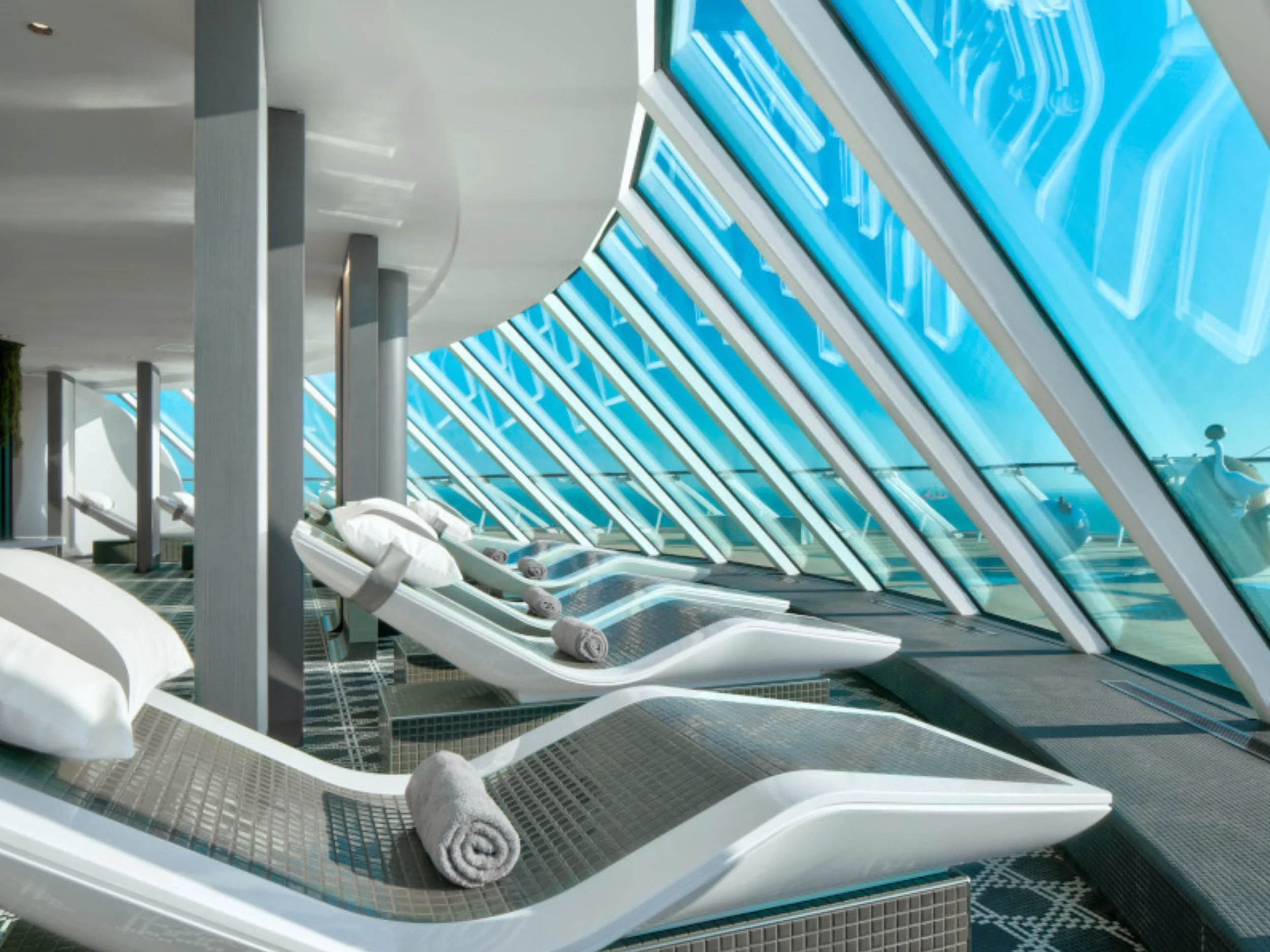
Celebrity Cruises Sea Thermal Suite
Why a cruise changes the decompression math
Here's what's different about a longer sailing versus a longer land-based trip.
On a land trip, the logistics don't stop. You're still making decisions - where to eat, how to get there, what to do next, which hotel to check into, how to handle the thing that went wrong with the reservation. Decision fatigue travels. It doesn't respect your itinerary.
On a ship, the logistics compress dramatically. You unpack once. The world moves around you while you sleep. Meals are handled. Transfers are handled. The framework of your day is built - not rigidly, but enough that you're not expending mental energy on the basic infrastructure of being somewhere.
What that creates is space. Genuine, unstructured, undemanded space. The kind that's increasingly hard to find anywhere else.
And when you're on a 10-day sailing, that space compounds. The first few days, you're still transitioning. By the middle of the trip, you've found your rhythm. By the end, you're operating at a frequency you probably haven't accessed in months.
We've seen it happen often enough that we're not surprised by it anymore. But we're still moved by it every time.
What Celebrity Cruises has built around this
Not all ships are created equal when it comes to actual wellness - the kind that goes beyond a spa menu and a salad bar.
Celebrity Cruises has built one of the most comprehensive wellness ecosystems at sea, and it's worth understanding what that actually means for someone who wants to use a sailing as genuine restoration rather than just a change of scenery.
AquaClass staterooms and Aqua Sky Suites are designed to create the ultimate in relaxation - with pillow menus, a yoga mat for private practice, and wellness channels. AquaClass guests enjoy included access to the Sea Thermal Suite or Persian Garden, with steam rooms, saunas, and heated loungers, as well as complimentary fitness classes and discounts on spa treatments arranged by a dedicated spa concierge.
AquaClass guests dine in Blu, which offers imaginative, fresh dishes with a healthy twist - the kind of food that supports how you want to feel rather than working against it.
Beyond AquaClass, Celebrity's ships offer state-of-the-art fitness classes including HIIT, Cardio Boxing, Pulse Barre, and indoor cycling, alongside yoga, meditation, and breathing technique classes - sometimes held on deck in the sunshine and fresh air.
On Edge-series ships, the Sea Thermal Suite includes aromatic steam, salt healing, crystal therapy, and infrared saunas, as well as a traditional Hammam experience. It's easy to spend hours there - moving between experiences, finding the particular kind of stillness that comes from warmth and quiet and nothing to do.
And then there's the simplest wellness feature of all: the running track on the upper deck, with salty air, the sound of waves, and the cry of seabirds. Even a slow walk around the deck - once in the morning, once at night - does something measurable to your nervous system after a few days.
This isn't a wellness cruise in the sense of a regimented program. It's a ship that makes it easy - genuinely easy, not aspirationally easy - to take care of yourself while you're there. Which is different from most environments most people spend their time in.
The case for 10 days specifically
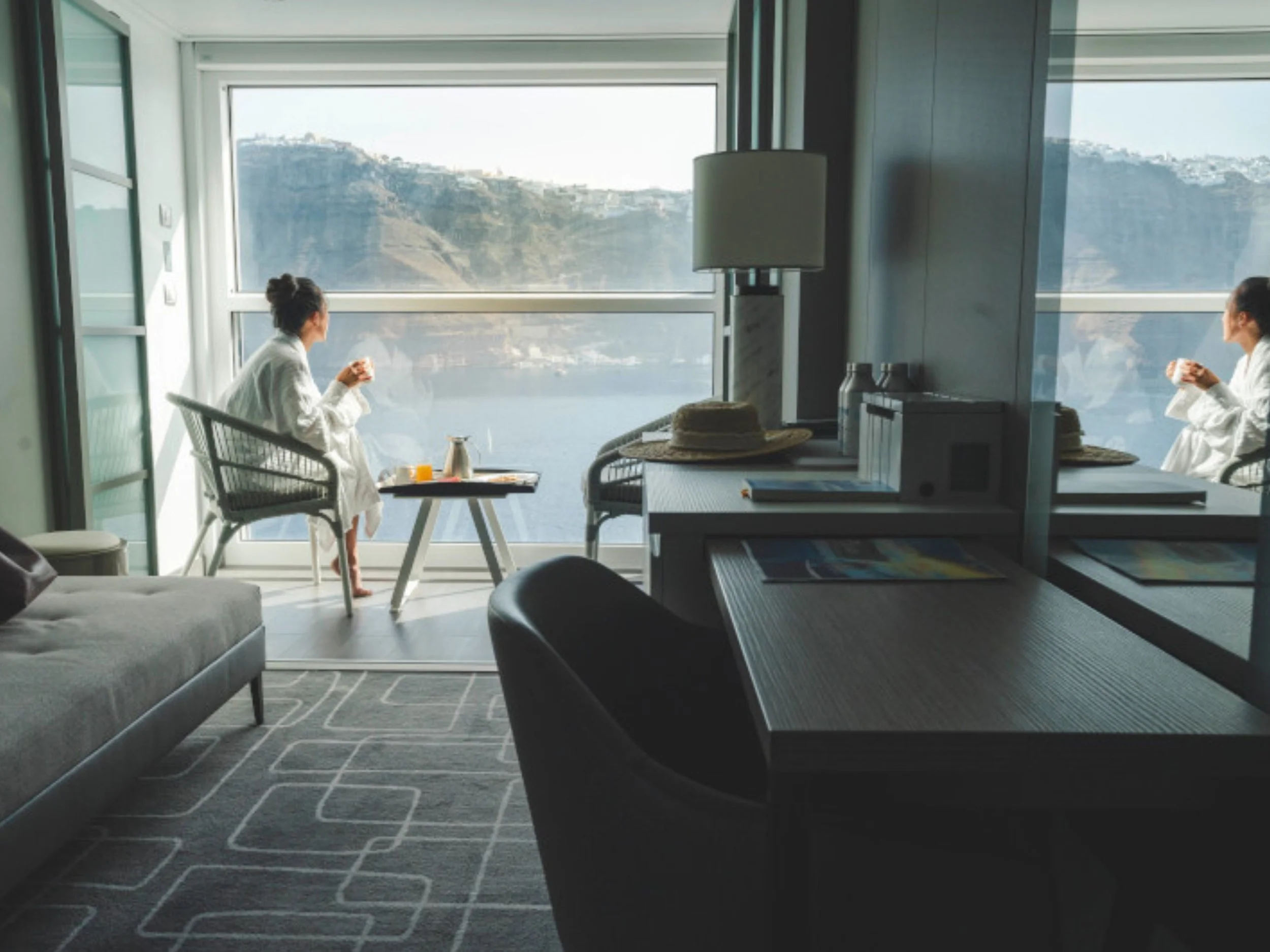
Celebrity Apex, Infinite Veranda
Seven nights is good. It gets you past the decompression threshold and gives you a few days of genuine rest.
Ten days is better. Here's why.
With ten days, you have the four-day threshold behind you and six days of actual rest on the other side. Six days of waking up without an alarm. Of reading something that has nothing to do with your industry. Of having the conversation with your travel companion that keeps getting postponed by the next urgent thing. Of standing at the rail watching the water and not thinking about anything in particular.
Six days of alpha waves.
The professionals we work with who take longer sailings consistently report coming home with something that shorter trips don't produce: clarity. Not just rest - actual clarity about what matters, what doesn't, what they want to change, what they want to keep. The kind of perspective that's almost impossible to access from inside your regular life.
Ten days isn't indulgent. It's the minimum viable investment in the version of yourself that makes better decisions, leads more effectively, and has something left over for the people who matter to you.
A note on the guilt
We know. We know about the guilt.
The projects that need you. The team that depends on you. The sense that taking ten days is something you haven't earned yet, or something you'll earn eventually, or something other people do but not you.
Research shows that workers fear falling behind on work and letting down their team - and face pressure from co-workers to stay connected even on vacation. 31 percent of U.S. adults said they are expected to answer phone calls or texts while on vacation.
Here's what we'd offer: the research on what happens to performance, creativity, and decision-making after genuine rest is unambiguous. 85 percent of global workers report that vacations make them feel more positive and optimistic, and 87 percent report that regular vacations are important for overall health and well-being.
The most effective version of you - the one your team, your clients, actually needs - is the rested one. Not the one who never leaves.
Ten days is not too long. For most of the people we work with, it's exactly long enough.
Wondering what a 10-day sailing might look like for you? Take our cruise style quiz to find your fit - or reach out directly and let's talk through what you're looking for. We'll handle the rest.