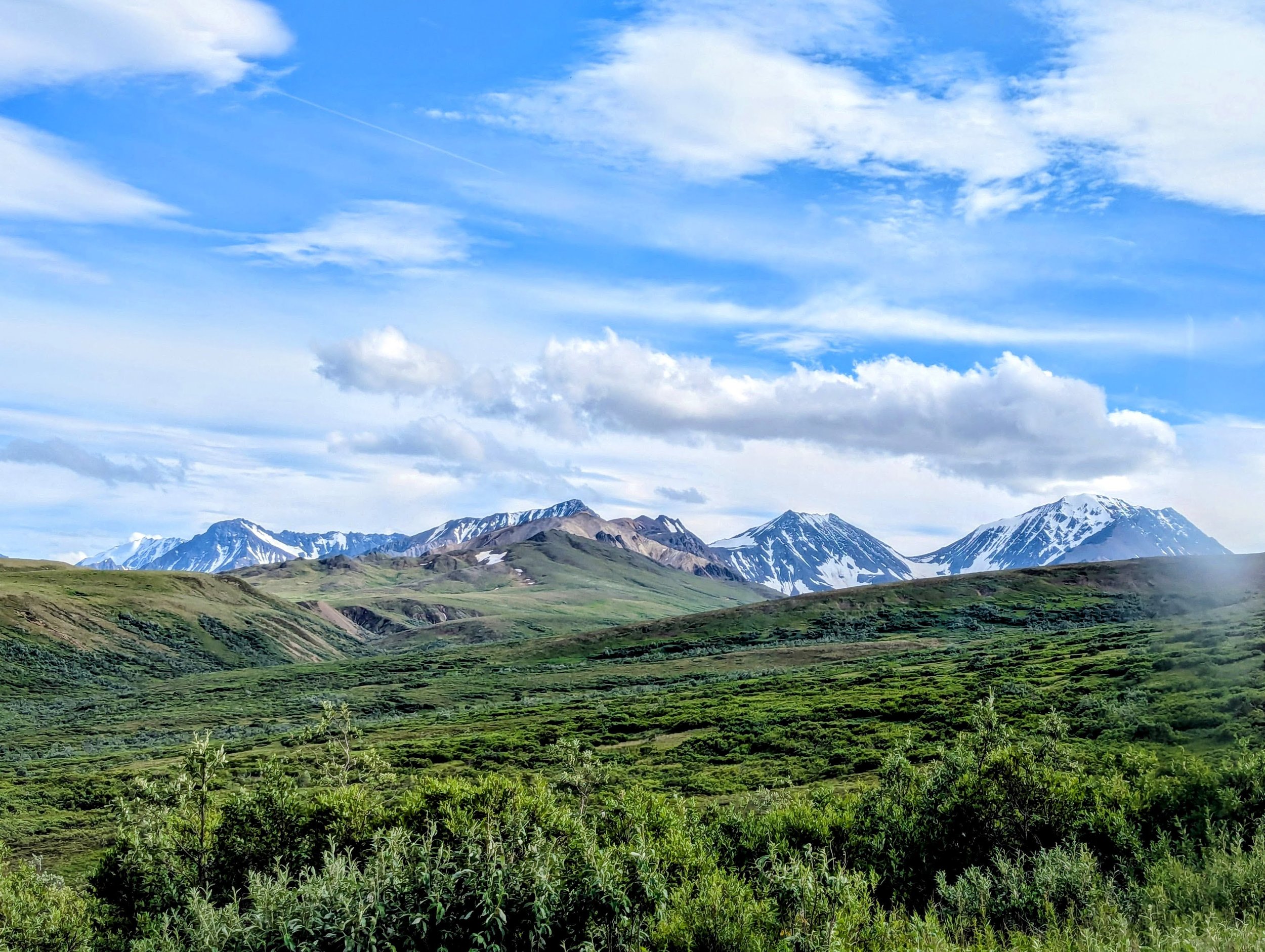
Here's which ones are accessible - and exactly how to get to each one.
Alaska is home to more national parkland than any other state in the country. Eight national park units are accessible on an Alaska cruise or cruisetour - some directly from the ship, some as part of a land extension, and a couple via floatplane from certain ports.
Most Alaska cruisers don't realize how many of these parks are within reach. Here's the full breakdown.
Direct From the Ship
These parks require no additional planning - they're part of the cruise experience itself.
Glacier Bay National Park & Preserve
Glacier Bay is one of the crown jewels of Alaska cruising - a UNESCO World Heritage Site and one of the most dramatic glacier landscapes on earth. On sailings that include Glacier Bay, the ship spends a full scenic cruising day inside the park, sailing past tidewater glaciers, watching for calving ice, and taking in a landscape that looks like the world is still being formed.
One important note: not every cruise line has access to Glacier Bay. The park limits the number of ships allowed inside, and a permit system controls who can enter. If Glacier Bay is a priority for your Alaska sailing, this needs to be part of your ship selection conversation - not an afterthought.
Lines with Glacier Bay access include Princess Cruises and Holland America, which operate the largest number of permitted sailings. Viking, Seabourn, Norwegian, and Cunard also have access. UnCruise Adventures offers small-ship expedition sailings that spend multiple days inside the park.
Klondike Gold Rush National Historical Park
This one surprises people - partly because it doesn't look like a national park in the traditional sense.
Klondike Gold Rush National Historical Park is located right in the heart of Skagway, Alaska. The historic buildings, boardwalks, and storefronts of Skagway's downtown are part of the park - making it one of the most walkable national park experiences in the country. You step off the ship and you're already inside it.
The park tells the story of the 1898 Klondike Gold Rush, when tens of thousands of prospectors flooded through Skagway on their way to the Yukon goldfields. The White Pass & Yukon Route railroad - still running today - follows the original trail these prospectors walked, winding through waterfalls, gorges, and dramatic mountain passes.
Sitka National Historical Park
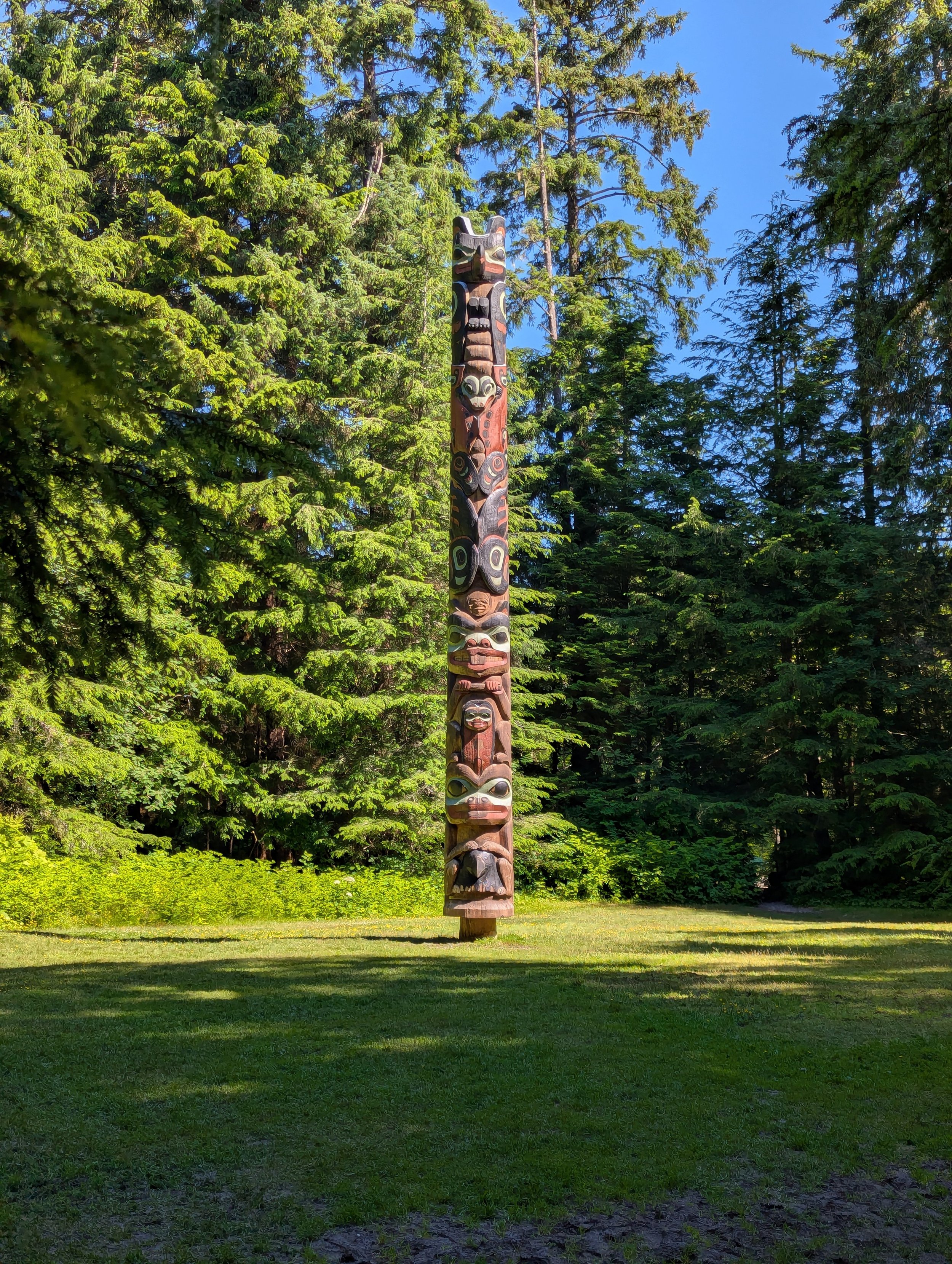
Sitka's national historical park is one of the most quietly extraordinary experiences available on an Alaska cruise - and one that most first-time visitors don't expect.
The totem poles aren't in a museum. They're standing in nature - among the trees, in a coastal rainforest, each one telling a story that goes back generations. The park is walkable from the port, free to enter, and genuinely moving in a way that's hard to describe until you've stood among those poles in the forest.
A note from Untethered Voyages: We visited Sitka National Historical Park on our own Alaska sailing and it was one of the most unexpectedly profound port experiences of the entire trip. Walking among the totem poles in the forest - not in a gift shop, not behind glass, but actually among the trees - is something we'll carry with us for a long time. Elizabeth called it one of the most peaceful, quietly extraordinary places she's ever been. Don't miss the visitor's center, which adds important cultural context to what you're seeing. This one is a must-not-miss.
Standard Land Extensions (Cruisetour)
These parks are accessible as part of a cruisetour - a pre- or post-cruise land journey that takes you into the interior of Alaska.
Denali National Park & Preserve
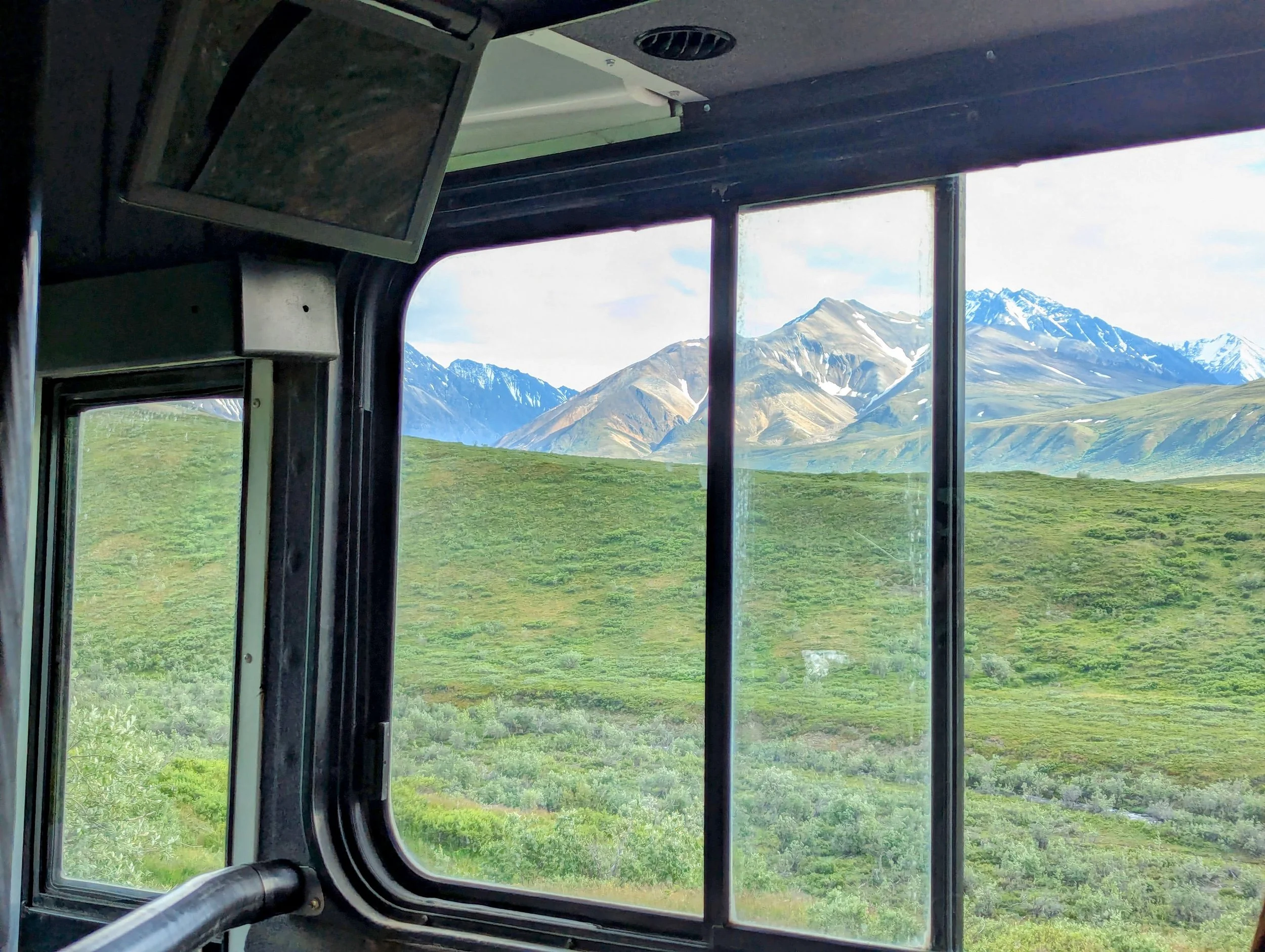
Denali is the crown jewel of the cruisetour experience - and the reason we consistently encourage Alaska travelers to consider adding a land extension to their sailing.
The park covers six million acres. The road into the park doesn't go anywhere near the peak - which sits at 20,310 feet and is visible from Anchorage on a clear day, 130 miles away. To experience Denali properly, you board a park bus and spend a full day on the tundra wilderness road, scanning for wildlife and waiting for the mountain to reveal itself through the clouds.
What you might see: grizzly bears, moose, caribou, Dall sheep (tiny white shapes on distant ridgelines that require patience and binoculars to spot), foxes, and golden eagles. What you will see: one of the most vast and humbling landscapes in North America.
The most common access point for cruisetour passengers is via the Alaska Railroad's dome cars - a spectacular journey from Anchorage through the interior, with wildlife viewing from the train and a connection to Denali's park lodges.
A note from Untethered Voyages: We visited Denali National Park on our cruisetour extension after our Alaska sailing. Dallin, our bus driver and guide, was extraordinary - patient, knowledgeable, and genuinely passionate about the park. He taught us how to "glass with our binocs" (scanning the terrain with binoculars the way experienced wildlife watchers do) and stopped multiple times so we could track bears, Dall sheep, moose, and caribou. We also spotted wildlife we didn't expect. Elizabeth and I took a hike and visited the visitor's center, which we'd call a genuine must-not-miss - it adds crucial context to the scale of what you're looking at. Our one honest note: we did our cruisetour after our sailing, and in retrospect, we'd recommend doing the land portion first. By the time we reached Denali, our energy was lower than it had been on the ship. Start with the land. End with the cruise.
Kenai Fjords National Park
Kenai Fjords is accessible from Seward - the port where many one-way Alaska sailings end (or begin). The park features tidewater glaciers, dramatic fjord scenery, and some of the best wildlife viewing in Alaska - sea otters, Steller sea lions, puffins, orcas, and humpback whales.
Day cruises into Kenai Fjords are available from Seward (book early - these excursions sell out quickly!) and can be added as a pre- or post-cruise excursion for travelers with extra time at either end of their sailing. If your itinerary starts or ends in Seward, this is worth building a day around.
Wrangell-St. Elias National Park & Preserve
The largest national park in the United States - larger than Switzerland - Wrangell-St. Elias is accessible on longer, premium "explorer" land packages that venture deeper into the Alaskan interior. It's not a standard cruisetour destination, but for travelers who want to go truly off the beaten path, it's one of the most extraordinary wilderness experiences in North America.
Via Shore Excursion (Fly-In)
Two additional national park units are accessible by floatplane from certain Alaska ports - specifically Homer and Kodiak, which appear on some longer or more expedition-focused itineraries.
Katmai National Park & Preserve - Famous for its brown bears catching sockeye salmon at Brooks Falls, Katmai is accessible via floatplane from Homer. If bear viewing is high on your list and your itinerary includes Homer, this is one of the most iconic wildlife experiences available anywhere in Alaska.
Lake Clark National Park & Preserve - Also accessible by small aircraft from Homer port stops, Lake Clark offers remote wilderness that very few travelers ever reach. For the adventurous traveler on the right itinerary, it's extraordinary.
The Full Picture
Here's a quick reference for all eight:
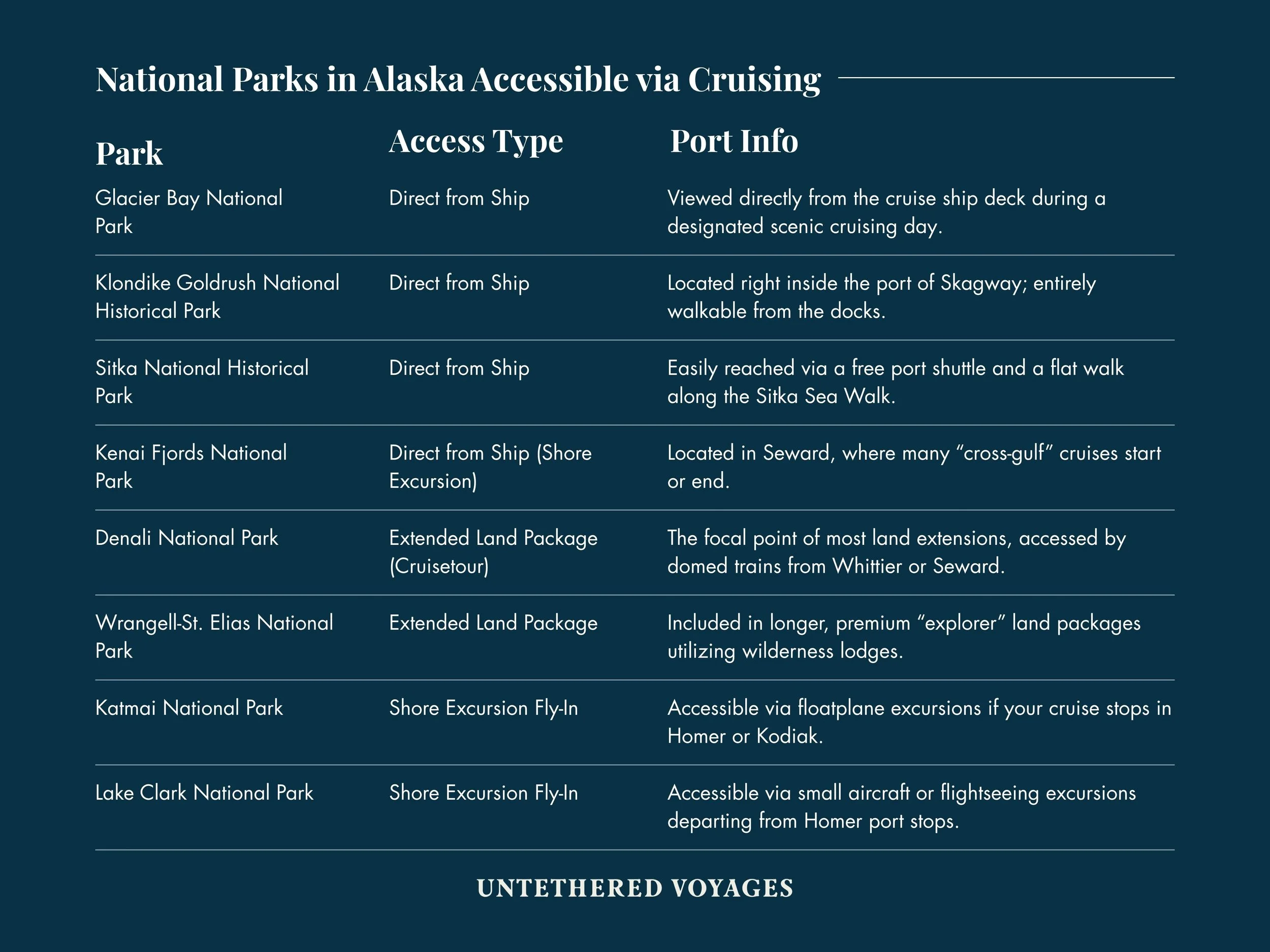
What This Means for Your Planning
The national parks you can access depend almost entirely on which ship you choose, which itinerary you sail, and whether you add a land extension.
If Glacier Bay is non-negotiable, your ship selection conversation needs to start there. If Denali is calling you, a cruisetour is the answer. If you want to maximize the number of parks you visit on a single trip, a one-way sailing with a cruisetour extension is almost certainly the right structure.
These are exactly the kinds of conversations worth having before you book - not after.
Reach out directly to talk through which parks matter most to you and how to build an itinerary around them. Or view The Alaska Shortlist → to see our three curated 2027 sailings.