
Here's the pricing conversation most coaches dread.
You've done the research. You know roughly what the retreat will cost. You've added up the cruise fare, the group programming, the extras, your time. You've come up with a number. And then you've looked at that number and thought: will they actually pay this?
The anxiety isn't really about the math. It's about the meaning. You're not just worried about whether clients can afford it - you're worried about whether they'll see it the same way you do. Whether the number will land as an obvious yes or as a hesitation that makes everything awkward.
Here's what we've learned working with coaches who price retreats well: the number matters far less than the frame around it. And the frame is entirely in your control.
START WITH WHAT IT ACTUALLY COSTS (AND WHY THAT'S LOWER THAN YOU THINK)
Before we talk about framing, let's get oriented on the numbers - because most coaches significantly overestimate what a cruise retreat costs before they've ever had a real conversation about it.
For a 5-night sailing on a premium cruise line in the Caribbean, the average per-person cost at double occupancy typically falls between $750 and $1,500. That's a starting point, not a ceiling - and it varies based on cruise line, time of year, how far in advance you book, and cabin category. But as a baseline for building your retreat pricing, it's a real number you can work with.
What's included in that number is important: the cabin, all meals and dining, entertainment, most onboard activities, and port access. You're not stacking hotel rooms, venue fees, catering minimums, and entertainment costs on top of each other the way you would with a land-based retreat. The all-inclusive model gives you genuine pricing transparency from day one.
And here's the piece most coaches miss: group pricing changes everything. When you bring a group, cruise lines offer rates, perks, and incentives that individual bookings never see. The per-person cost your clients pay is almost always lower than what they'd pay booking the same sailing on their own. That's worth saying out loud when you're presenting the retreat - because it reframes the expense from "I'm paying my coach to take me on a cruise" to "I'm getting a better deal on an extraordinary experience because my coach made this happen."
What's worth knowing before you publish any number publicly: group pricing through a retreat planning partner like us almost always looks different - and better - than what you'd find booking direct. Cruise lines offer rates, perks, and incentives for groups that individual bookings may never see. A quick conversation with us before you set your retreat price could mean the difference between pricing based on guesswork and pricing based on what you'll actually pay.
THE FRAME THAT MAKES IT A YES
Numbers don't sell retreats. Stories do. Specifically, the story of what the retreat makes possible.
If you lead with the cost, the client's brain immediately starts doing comparison math. Is this more or less than I'd spend on a vacation? Is this more or less than the last course I bought? Can I justify this? Those are the wrong questions - and once they're being asked, you're in a negotiation, not an enrollment.
The coaches who price retreats confidently don't lead with the number. They lead with the outcome.
What will your clients be able to do after this retreat that they can't do right now? (Sound familiar? It's the same question we wrote about last week - and it does double duty here.) The answer to that question is your real offer. The cruise is just the container.
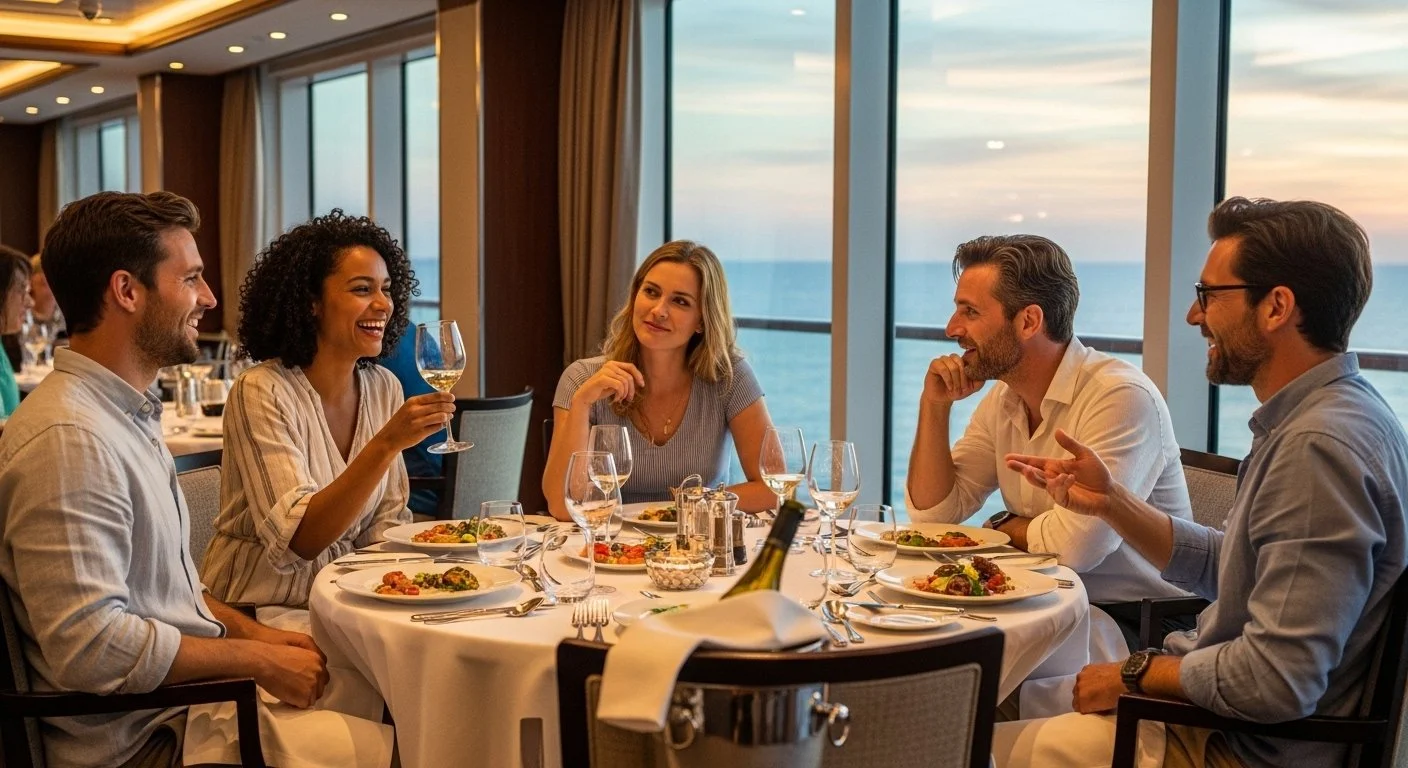
When a client hears "five days at sea in the Caribbean with our full group, fully facilitated, all meals and entertainment included, starting at $X" — the X lands differently if it follows a clear picture of what they're investing in. The transformation, the community, the removal from ordinary life, the experience they'll talk about for years. Price that. Not the ship.

THREE FRAMING MOVES THAT WORK
Here's how coaches who price retreats well actually present the investment:
Bundle the transformation, not the logistics. Don't itemize the cruise fare, your facilitation fee, and the group perks separately. Present a single retreat investment that includes everything. Itemized pricing gives clients things to negotiate. A single investment tied to a clear outcome doesn't invite that conversation.
Anchor to what they already spend. Most of your clients are already investing in their professional development - courses, masterminds, coaching programs, conferences. A well-framed retreat sits comfortably in that context. "This is comparable to what you'd invest in a year of a mastermind - and you'll get more out of five days together than six months of Zoom calls" is a true statement for most coaching groups. Say it.
Use the all-inclusive model as a selling point. When clients understand that meals, entertainment, activities, and accommodations are all included - that they can budget a fixed number and know exactly what they're getting - the perceived value goes up and the perceived risk goes down. Compare it to a hotel-based retreat where every element is a la carte and the final bill is always a surprise. The cruise retreat wins on predictability alone.
WHAT TO DO WHEN SOMEONE SAYS IT'S TOO EXPENSIVE
First: breathe. A price objection is not a no. It's a question - usually some version of "help me understand why this is worth it."
The answer is always in the outcome, not the justification. Don't defend the cost of the cruise. Redirect to the cost of not doing it: another year of a community that stays surface-level, another year without the breakthrough conversation, another year of putting off the thing they know they need.
And if they genuinely can't make the numbers work, group pricing, cabin category options, and payment plans are all tools in your toolkit. A discovery call with us will show you exactly what flexibility exists - and how to present it in a way that feels like an upgrade path, not a consolation prize.
THE HONEST BOTTOM LINE
Pricing a retreat confidently isn't about being bold or ignoring your clients' budgets. It's about knowing - clearly and specifically - what you're offering them, and trusting that the right clients will see the same value you do.
Coaches who underprice their retreats almost always do it for the same reason: they're not fully confident the experience will deliver what they're promising. The ones who price with confidence have done the work of knowing exactly what they're designing and why it matters.
The ship handles the environment. You handle the transformation. Between those two things, the price is easy to justify.
Ready to find out what a retreat could actually cost for your group? Start here - it's built for coaches and walks through exactly how this works. Or book a free discovery call and we'll walk you through real numbers and options.
If you're still building the case - for yourself or for your clients - these posts will help:
The Question Every Coach Should Ask Before Planning a Retreat - start here, before you set a price for anything.
The Real ROI of a Group Retreat (And How to Actually Measure It - the business case that makes pricing easier to defend.
The Retreat You Keep Putting Off (And the Real Reason It Hasn't Happened Yet - if pricing isn't the only thing in the way.
What to Look for in a Coaching Retreat Venue (And Why a Ship Beats a Resort - so you can speak to the value of the environment, not just the experience.
How We Find the Right Ship for Your Retreat (So You Don't Have To) - what happens after the discovery call.